
In-Person Couples Therapy and Marriage Counseling in Evanston, IL, and Online in Illinois
Compassionate Counseling for Couples Experiencing Conflict and Anxiety in Their Relationship.

Compassionate Counseling for Couples Experiencing Conflict and Anxiety in Their Relationship.
Navigating the daily challenges of a troubled relationship can leave you feeling exhausted, disconnected from your partner, heartbroken and alone. The distance between you is growing wider by the day, and it doesn’t seem to matter what you do — you just can’t connect as you once did.
You may be at a crossroads right now, considering splitting up or getting professional help. But you’re here reading this, so you’ve chosen to find ways to solve the problems and reconnect with your loved one. You’re still committed to the relationship, so there is hope.
Through Couples Therapy and Marriage Counseling, you and your partner can restore the warm, affectionate bond you once cherished.

Avoiding difficult conversations (and potential arguments) to maintain harmony may seem like the best thing to do, but it causes more harm than good. Unresolved conflicts resurface more and more often over time and can have devastating consequences for the relationship.
If you don’t address the root cause of the tension, you’ll find yourselves constantly bickering over everything. Every little quarrel will lead to more anxiety and emotional turmoil, further straining your relationship.
Avoiding the tension by avoiding your partner may bring a little relief. But the loneliness, isolation, and heartache of being alone within a relationship are just different kinds of emotional pain. Leading separate lives only leads to separation.
Perhaps you’ve grown so far apart that you only communicate through arguments or stop communicating altogether. Finding your way back to a healthy relationship may only be possible with the guidance of an empathetic therapist.
At Evanston Counseling, our therapists are trained to help you uncover and resolve the core issues driving you apart. And then, we’ll show you and your partner healthier ways of approaching disagreement and conflict.
It’s no secret that relationships require effort, and many couples seek counseling to resolve issues both large and small. Whether you’re facing a temporary rough patch or have more significant concerns, our trained couples therapists at Evanston Counseling are here to help.
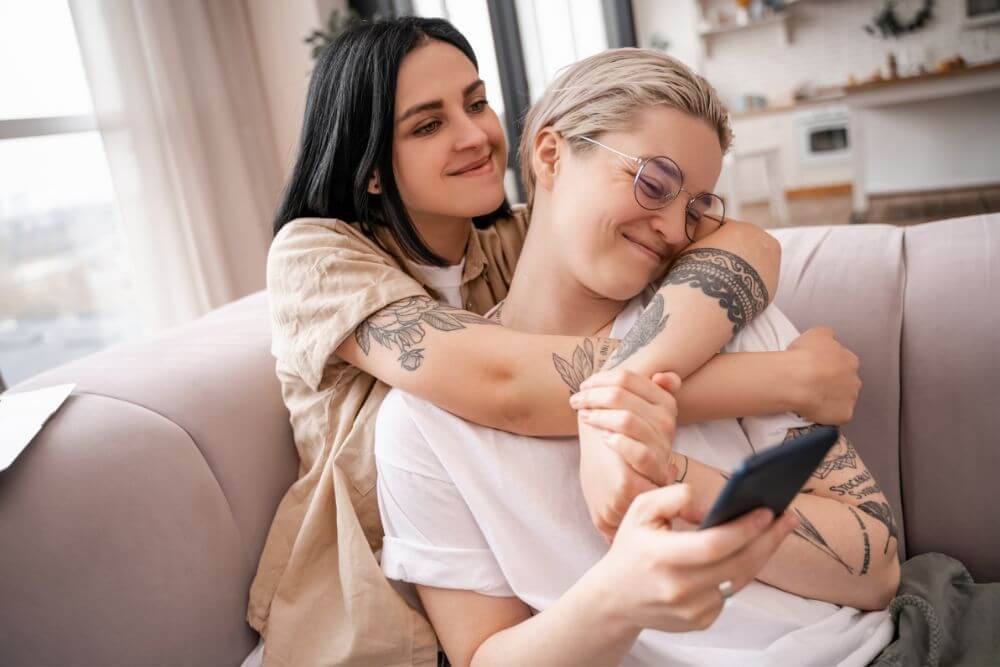
At Evanston Counseling, we help couples return to a place of mutual respect, empathy, and understanding.
We create a supportive, collaborative environment where both partners work through their issues with the counselor’s guidance. By engaging in this process, you’ll rediscover the shared sense of unity and closeness that comes from tackling challenges together.
Our priority is to provide non-judgmental counseling where you and your partner can openly share your concerns. We want you both to feel heard, respected, and supported throughout the therapeutic journey. The compassionate therapists at Evanston Counseling can help you rediscover the genuine joy and happiness that comes from a healthy relationship with the one you love.
What is couples therapy and how does it work?
Couples counseling is a type of therapy designed to help partners communicate better, reconnect, and work through the issues that are getting in the way of a healthy relationship. At Evanston Counseling, most couples come to us because they want to feel closer, communicate better, and find their way back to each other.
Couples usually seek out therapy when they have lost something in their relationship, such as a sense of closeness or intimacy. Often, they want to regain the friendship and closeness they once had. Many couples tell us they feel like housemates with their partners, and they are looking for ways to find each other again.
By the time most couples reach out, they are feeling frustrated, stuck, and alone. There is often grief that comes with it, too, a longing for the way things used to be. Some are exhausted from trying so hard and still not getting anywhere. Others are afraid to bring something up at home because they already know exactly how it will end. If any of this sounds familiar, you are not alone, and it does not have to stay this way.
A good therapist helps you see the patterns you can’t see when you are in the middle of them. Most couples end up in the same argument every time, misinterpret each other’s intentions, and get so caught up in their own feelings and fears that their partner’s feelings get lost entirely. Our couples therapists in Evanston draw on Gottman’s research to help couples recognize these patterns, understand each other’s attachment styles, and learn to truly listen to each other, sometimes for the first time.
It can feel like a relief to have a neutral third person in the room. A safe place to say the things you may be too scared to share when you are alone with your partner. Somewhere, your thoughts and feelings will be validated, heard, and not turned into the same familiar and hurtful argument. A good therapist can help you find the person you originally fell in love with, or at a minimum, work through disagreements and find some common ground.
Do we have to be in crisis to start couples therapy?
You do not need to be in crisis to start couples counseling. At Evanston Counseling, we often advise couples not to wait until it gets to that point. The sooner you address the disconnect in your relationship, the better. It is easier to make changes before things reach a crisis. Once it gets there, it is often much harder to turn around.
A lot of couples put it off because they are not sure their problems are serious enough, or one person is ready and the other isn’t. Some avoid bringing things up at home altogether because it only leads to the same hard feelings and arguments. Others are scared it might already be too late. But… It is never too late.
Couples who come in to see us often leave feeling they have regained the closeness and intimacy that drew them together in the first place, and that is a huge relief.
What issues can couples therapy help with?
Couples therapy at Evanston Counseling can help address a wide range of issues that arise in relationships. Some of the most common things couples bring to us include:
If something is putting a strain on your relationship, our couples therapists are here to help. Most couples are surprised by how much is actually workable when they finally have the right support. And the best thing is, you can come into our office in Evanston or meet online. Whatever works best with your busy schedules.
Will the couples therapist take sides?
No, your couples therapist will not take sides. Your therapist is there as a neutral party, almost like a mediator, whose job is to help both of you feel understood. Being neutral means listening and understanding how you both feel.
If one person feels like the therapist is taking sides, they will no longer feel comfortable sharing their feelings or point of view. And when that happens, the whole process breaks down. That is why neutrality is so important.
Good couples therapy in Evanston gives you something different. A place where you can safely speak your mind and explain how you feel without worrying that it will cause a fight. A place where maybe, this time, it will be received differently. For a lot of couples, this experience alone is worth the world.
How long does couples counseling typically take?
How long couples counseling takes depends on what you are working on and what you are hoping to get out of it. Couples work focuses on communication, interactions, and relationship patterns and dynamics. It is more concrete and direct than individual therapy. Your therapist will be able to see what is going on in your interactions up front, in person, in the room. This makes it easier to identify what needs to change and to start working on it right away. At Evanston Counseling, many couples start to see changes faster than they expect.
Many couples choose to keep coming long after things have improved. It feels good to feel connected and to keep growing together. Many also want to maintain the gains they have made in communication. For these couples, therapy becomes less about fixing things and more about maintenance.
There is no set timeline. Some couples who come to our couples therapists in Evanston stay for a few months, others come for years. When you feel like you have what you need, you will know. We are here until that point and beyond if you want us to be.
Can couples counseling help after infidelity?
Yes, couples counseling can absolutely help after infidelity. At Evanston Counseling, we work with couples who are struggling with infidelity regularly. Therapy can help you understand what happened and why, and help both of you decide what you want to do next. Do you try to work through the breach in trust, or do you decide to move on? Therapy gives you a safe place to figure that out together.
There is nothing worse than the feeling of distrust, sadness, anger, and betrayal you feel when you find out the person you are supposed to rely on the most has cheated on you. The pain is real, and it deserves to be acknowledged. Therapy gives you a place to process that pain, ask the hard questions, and figure out the best path forward for both of you. It is a complicated situation with pain on both sides, and a good therapist helps you sort through all of it without judgment.
Rebuilding trust is a process, and there are no shortcuts. But many couples who come to our couples therapists in Evanston not only make it through, they actually come out closer than they were before. Drawing on Gottman’s research, we help couples work through betrayal in a way that is honest, structured, and at a pace that feels manageable for both of you.
Can couples counseling save a relationship that feels hopeless?
Couples counseling can absolutely save a relationship that feels hopeless. It is not uncommon for couples to hit impasses and feel hopeless. Staying connected is one of the hardest things to do in a relationship.
People change, and couples sometimes lose their way. But whatever was there at the beginning is most often still there. Hopeless does not mean done. The work is finding your way back to appreciating your partner and learning to communicate well at whatever stage of life you are in now. Our couples therapists in Evanston help you do exactly that. They sit with you as you rediscover what made you choose each other and help you rebuild from there.
What happens in a couples counseling session?
A couples counseling session at Evanston Counseling begins with your therapist listening to both of you. We want to hear what is happening between you now, as well as the history of how you got here.
During the initial sessions, we’ll ask about your families of origin and discuss your attachment styles—the ways you learned to form connections early in life. To help us understand the dynamics between you, we often use insights from Dr. John Gottman’s research, which focuses on the factors that help relationships succeed or struggle. We also want to know what is bringing you to couples counseling and what you are hoping to get from it. From there, we develop a plan to help you reach those goals.
Once we have a clearer picture from those early sessions, we will shift our focus to closely examining how you interact and respond to one another in the room. We will help you communicate so that you feel heard. By that point, you will most likely leave with concrete things for the two of you to think about and work on between sessions, so you can carry the work forward together.
Should we do individual therapy in addition to couples therapy?
Doing individual therapy in addition to couples therapy can be incredibly helpful. At Evanston Counseling, we do this often. Typically, you would see one therapist for your individual work and another for couples work. This keeps things confidential and allows your couples therapist to stay objective and focused on the relationship rather than holding individual information that could affect that neutrality.
Individual and couples therapy complement each other really well. In individual therapy, you can work through your own personal issues and explore what might be getting in the way of having the kind of relationship you want. You can also process any feelings or difficulties that have come up in your couples sessions.
Your individual therapist can help you think through what you want to say and work on in couples therapy, and your couples therapist can make suggestions about what might be helpful to focus on individually. Having two therapists means each one can stay focused on their role and do what they do best. People who see both an individual and a couples therapist tend to see the most progress.
What’s the Gottman Method and is it used in couples therapy?
The Gottman Method is an approach to couples therapy based on decades of research about what makes relationships work and what makes them fall apart. It was developed by Dr. John Gottman, one of the most respected names in couples therapy. It focuses on recognizing patterns that tend to break down relationships and replaces these behaviors with interactions that encourage connection.
At Evanston Counseling, our clients like the Gottman Method because it provides practical tools they can use at home. Many clients find it useful to have the Gottman materials as an ongoing reference at home.
The Gottman Method gives both partners the language to describe what is happening between them, which makes it easier to talk about problems and begin to change them.

You and your partner took a big step just by being here. Couples therapy and marriage counseling at Evanston Counseling can help you find your way back to each other. You don’t have to keep feeling stuck, distant, or unheard. Take the next step together by following the steps below:
Couples therapy in Evanston, IL is just one of the many ways Evanston Counseling shows up for the people in our community. We offer specialized support across a wide range of needs, including Therapy for Moms, Therapy for College Students, Therapy for Young Adults, Teen Therapy, Therapy for Anxiety, Therapy for Depression, and Therapy for Chronic Pain. Our therapeutic approaches include hypnotherapy, pet therapy, online therapy, and cognitive behavioral therapy. Whatever you are navigating, we are here to help. Reach out today to find the right support for you.


